
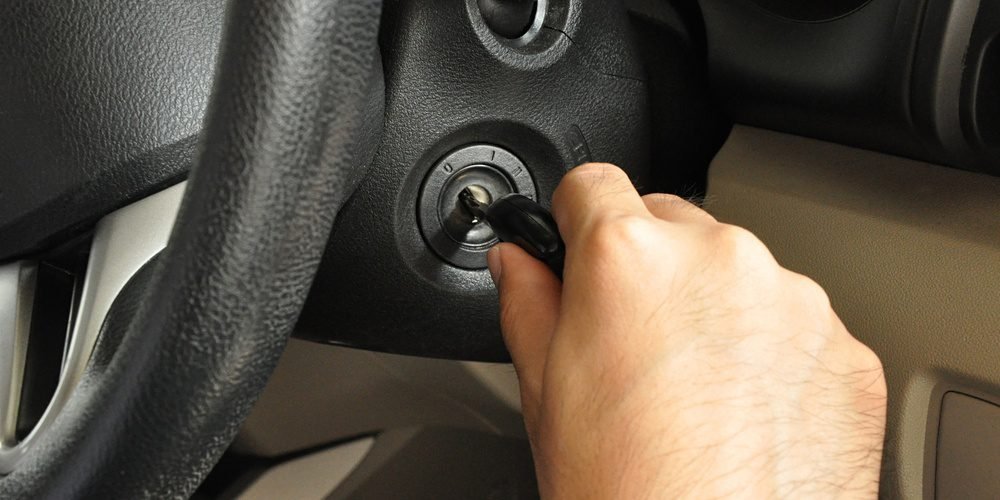
Few things are as instantly frustrating as sitting in the driver’s seat, ready to start your commute, only to find that your car key is completely paralysed in the ignition. You insert the blade smoothly, but when you attempt to rotate it forward to engage the starter motor, it feels as though it has hit a solid wall of metal. In this moment of panic, the natural human instinct is to grip the plastic head tighter and forcefully twist it.
Resist this urge immediately. Modern car keys are cut from brass or soft alloys that will twist, bend, and ultimately snap if subjected to excessive torque. When a car key won’t turn, it is never because you are not pulling hard enough; it is because a mechanical safety feature has engaged or a vital component has physically failed. By calmly assessing the symptoms, you can easily diagnose whether you are dealing with a simple locked steering column or a complex mechanical failure requiring professional intervention.
The Most Common Culprit: The Steering Wheel Lock Mechanism
Before assuming that your internal ignition system has collapsed, you must check the steering wheel. Almost all modern vehicles are equipped with an anti-theft mechanical steering lock. This system is designed to physically lock the steering column in place if the wheel is turned after the key has been removed from the ignition. It prevents a thief from steering the vehicle even if they manage to hotwire the engine.
Often, drivers accidentally trigger this lock when exiting the vehicle by using the steering wheel for leverage to climb out. When the steering lock engages, it puts immense physical pressure on the ignition cylinder’s internal locking bolt, trapping it in place and preventing the key from rotating.
How to Release a Bound Steering Wheel
To resolve this, you need to relieve the mechanical pressure on the ignition cylinder. Grip the steering wheel with both hands and attempt to gently turn it left and right. You will notice that the wheel is completely rigid in one direction but has a tiny amount of elastic “give” or movement in the opposite direction.
Pull the steering wheel firmly in the direction of the “give” and hold it there under steady pressure. While holding the wheel in this exact position, gently turn your ignition key. If the steering lock was the culprit, the pressure will be released, and the key will turn smoothly, allowing the engine to start.
Diagnosing a Worn or Damaged Key Blade
If the steering wheel turns freely but the key remains stubbornly locked, the problem lies within the interaction between the key blade and the ignition cylinder. Car keys endure an incredible amount of daily abuse. They are dropped on concrete, used to open parcels, and constantly subjected to friction every time they are inserted and removed from the door locks and the ignition.
Over years of use, the sharp, distinct ridges and valleys (the “cuts”) on a brass key blade will gradually round off and become completely smooth. An ignition cylinder contains a series of delicate internal spring-loaded wafers. When you insert a healthy key, the precise cuts push these wafers to specific heights, creating a perfectly flush “shear line” that allows the cylinder to rotate. If your key is worn flat, it can no longer push the internal wafers to the correct heights. The shear line remains blocked, and the cylinder refuses to turn.
To test this, retrieve your spare car key, preferably one that has been sitting safely in a drawer and retains its factory-sharp cuts. If the spare key turns the ignition effortlessly, your primary key has worn beyond its usable lifespan. You will need to organise replacement keys cut to the original factory codes rather than duplicating the worn-out key.
Ignition Cylinder Failure: When the Internal Mechanisms Break
If both your primary key and your factory-fresh spare key fail to rotate the ignition, the failure is isolated to the vehicle’s internal hardware. The ignition cylinder itself is a heavily used mechanical component, and like brake pads or tyres, it is subject to natural wear and tear.
The Damage Caused by Heavy Keychains
One of the leading causes of premature ignition cylinder failure is a heavy keychain. Many drivers attach house keys, metal trinkets, gym fobs, and heavy carabiners to their car keys. While the key is inserted in the ignition, the combined weight of these items hangs downward, creating a pendulum effect.
As you drive over speed bumps, potholes, and rough terrain, this heavy cluster constantly bounces. This bouncing action translates into aggressive, microscopic friction inside the ignition cylinder, wearing out the delicate brass wafers and the internal springs long before their expected lifespan. Eventually, a wafer will bend, break, or become permanently jammed. When this happens, the cylinder cannot align, and the ignition is permanently locked.
Replacing or repairing a collapsed cylinder is not a DIY task; it requires specialised automotive locksmith services to safely dismantle the steering column housing and extract the broken internal hardware.
Gear Selector and Interlock Switch Malfunctions
For drivers of automatic vehicles, there is an electronic safety bridge between the transmission and the ignition cylinder known as the shift interlock solenoid. This safety feature ensures that the vehicle cannot be started unless the transmission is securely engaged in ‘Park’ or ‘Neutral’.
If the internal sensor in the gear selector fails, or if debris (like coins or food crumbs) falls down into the gearstick housing and prevents the lever from fully clicking into the ‘Park’ position, the car’s computer will deliberately lock the ignition. Ensure your gear lever is pushed completely forward. Jiggle the gear stick firmly while in the ‘Park’ position to ensure the microswitch has engaged, and try turning the key again.
Safe Extraction and Direct Repair Solutions
When all troubleshooting steps fail, when the steering wheel is free, the gear selector is engaged, and the spare key refuses to budge, the ignition cylinder has suffered a catastrophic mechanical jam. Continuing to wiggle, force, or hammer the key at this stage drastically increases the risk of snapping the blade flush inside the dashboard.
A broken blade immediately escalates the repair complexity, requiring a delicate broken key extraction procedure before any further diagnostics can occur. Rather than paying exorbitant fees to have a completely immobilised vehicle towed to a main dealership, securing a mobile technician capable of performing an on-site ignition switch repair allows the damaged wafers to be removed, the cylinder rebuilt, and the steering column reassembled directly in your driveway.