If you live in the “Sulfur City” or anywhere along the volatile Taupo Volcanic Zone, you are likely well-acquainted with the distinct scent of the Central North Island. While the geothermal activity makes our region a world-class tourist destination, it is incredibly harsh on the infrastructure of your home, specifically, your door locks and security hardware.
For residents in Rotorua, Taupo, Turangi, and Tokoroa, a “stuck lock” is rarely just a fluke. It is often the result of a chemical reaction. Understanding how this environment affects your hardware is the first step in avoiding a stressful emergency locksmith Rotorua call-out in the middle of the night.
The Chemistry of Corrosion: Why Sulfur Destroys Steel
The geothermal vents and hot springs in the Central Plateau release hydrogen sulfide gas. When this gas meets moisture in the air, it becomes mildly acidic. Standard lock cylinders are often made of brass, zinc, or low-grade steel components. When these metals are exposed to sulfur-rich air, they undergo rapid oxidation.
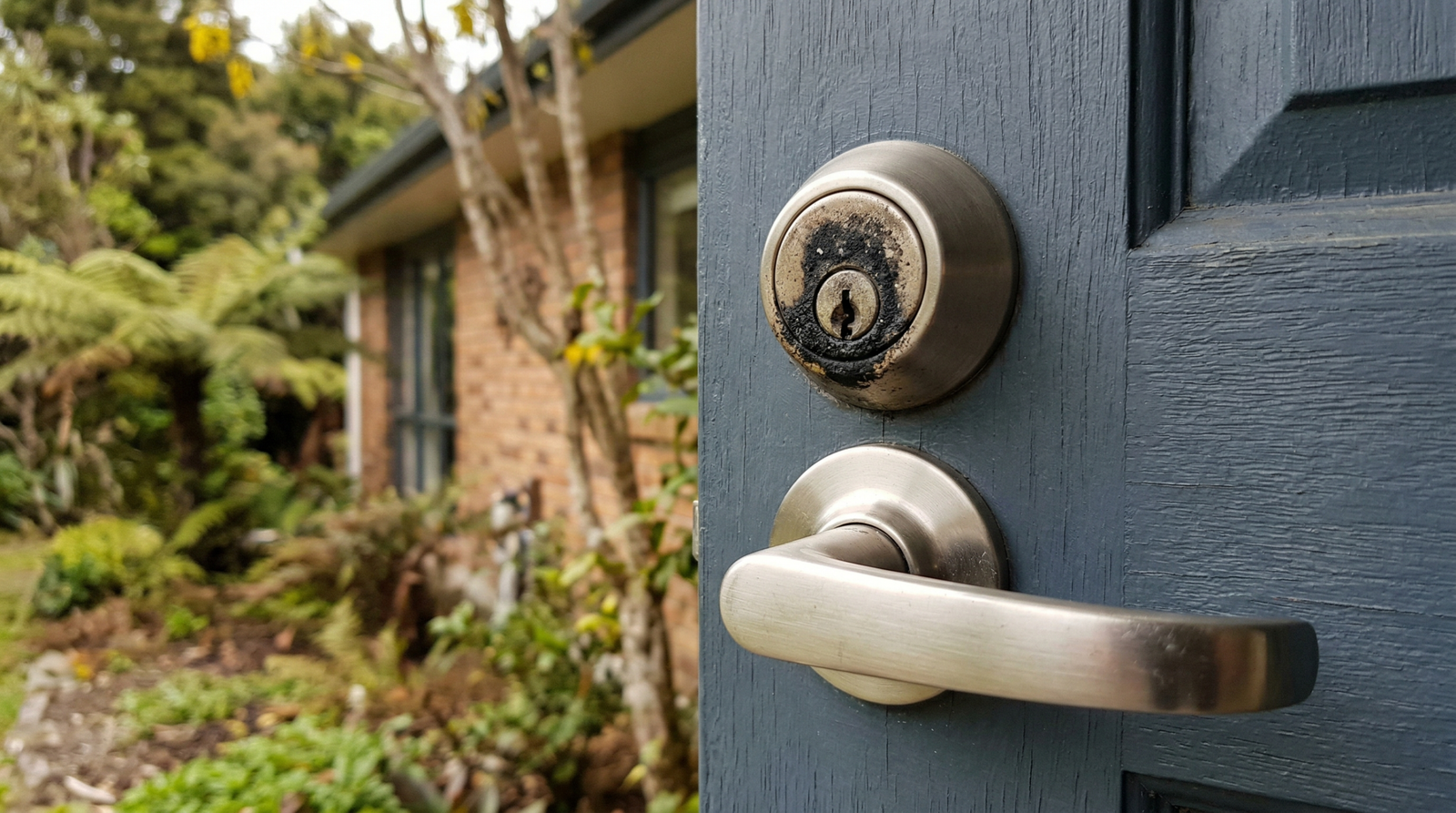
This creates a black, gritty residue inside the lock’s internal pin-and-tumbler system. Over time, the springs lose their tension, and the pins become “welded” in place by corrosion. This is why you might find your key suddenly won’t turn, or worse, snaps off entirely. If you find yourself in this situation, you’ll need an expert car key cutting Taupo or a specialist to extract the fragment without destroying the entire housing.
Recognizing the Warning Signs of Geothermal Damage
Most people ignore the early signs of lock failure until they are standing outside in the rain, unable to get into their house. To avoid needing a residential locksmith Tokoroa, look for these red flags:
- The “Gritty” Turn: If inserting or turning your key feels like there is sand inside the lock, sulfur buildup has already begun.
- Discoloration: Look at the “plug” (the part where the key goes in). If it has turned a dark, oily black or a dull greenish-grey, the metal is corroding.
- The Key Stick: If you have to “jiggle” the key to get it to turn, the internal springs are failing.
- Visible Rust on the Strike Plate: If the metal plate on the door frame is rusting, the internal mechanism is likely in worse shape.
When these signs appear, it is time to look for a locksmith near me who understands the local climate. Replacing a cylinder early is significantly cheaper than a 24 hour locksmith Rotorua emergency visit.
Commercial vs. Residential: Protecting Your Assets
The stakes are even higher for local businesses. A seized lock on a storefront in downtown Rotorua or a warehouse in Tokoroa can halt operations for hours. Because commercial locks often see higher traffic, the friction combined with geothermal corrosion accelerates wear and tear.
If you manage a property, a commercial locksmith Taupo can recommend high-grade stainless steel or PVD (Physical Vapor Deposition) coated hardware. These finishes are specifically designed to withstand corrosive environments, ensuring that your emergency locksmith Turangi calls are kept to a minimum.
Why Your Car Isn’t Safe Either
It’s not just your front door at risk. Modern vehicles with traditional key entries or even the emergency key blades hidden inside “keyless” remotes are susceptible. If you haven’t used your physical car key in months because you use a remote, the lock cylinder might already be seized.
For those living in the Central Plateau, we recommend testing your physical car locks once a month. If the lock is jammed, you may eventually face a car lockout service in Tokoroa. Ensuring you have a functional spare through a key duplication service in Rotorua is the best insurance policy against the elements.
Prevention: How to Extend the Life of Your Locks
While you can’t change the air in the Central North Island, you can change how you maintain your hardware.
- Avoid WD-40: This is a common mistake. WD-40 is a solvent, not a long-term lubricant. It attracts dust and sulfur particles, creating a “gunk” that hardens over time.
- Use Graphite or Silicone: Use a dry graphite powder or a high-quality Teflon-based lubricant. These don’t attract the grit that causes seizing.
- Regular Cleaning: Wipe down the exterior of your locks with a damp cloth and mild soap to remove sulfur deposits from the surface.
- Upgrade to Marine Grade: If you are replacing locks, ask your locksmith Rotorua for “marine-grade” or “316 stainless steel” options. These are built for salt air but perform exceptionally well in geothermal zones.
Professional Help in the Central North Island
Whether you are locked out of your home in Turangi or need a car locksmith Taupo to help with a seized ignition, choosing a local expert is vital. A technician from outside the region might not understand why your locks are failing so frequently.
Investing in key cutting Tokoroa for high-quality, nickel-silver keys (which resist corrosion better than brass) and scheduling a yearly “security health check” can save you hundreds of dollars in the long run. Don’t let the sulfur win. Keep your home and vehicle secure with hardware that’s built to last in our unique environment.